You know what’s funny about phone cases?
Nobody really wants to buy one.
A phone case is like flossing: you respect the concept, you ignore it until something painful happens, and then you suddenly become a devoted believer. One drop. One corner-first bounce on concrete. One slow-motion “nooooo” moment in a parking lot. And then you’re online at 1:17 a.m. looking for protection that doesn’t make your phone feel like it’s wearing a winter coat.
That’s the door MOUS walks through—confidently, like it’s been there before. Because MOUS doesn’t sell the idea of a case as a boring accessory. It sells the idea of a case as a system: protection, grip, magnets, mounts, wallets, screen protection, and a whole ecosystem of add-ons that make the phone you already love… easier to live with. Their lineup is built around protective cases with AiroShock® technology and MagSafe® compatibility, plus accessories like mounts and magnetic wallets.
And before you roll your eyes and say, “It’s just a case,” let me ask you a different question:
When did your phone stop being a phone?
Because now it’s your wallet, your camera, your GPS, your boarding pass, your work chat, your banking app, your calendar, your memory vault, and your “I swear I’ll respond later” machine. This slab of glass isn’t a gadget anymore. It’s a portable control center. So why are people still protecting it with a flimsy piece of plastic that feels like it came free with a cereal box?
The real problem isn’t “drops.” It’s life.
People obsess over drop tests like they’re watching a boxing match: “How many feet? What angle? Concrete or tile?” Sure, drops matter. But the real enemy is daily chaos.
Your phone slides off a couch armrest because you thought it was flat.
It falls out of your pocket when you get out of the car like gravity just remembered you exist.
It gets knocked off a café table by your own elbow because you were too excited about the croissant.
It gets scraped by keys.
It gets sand in the speaker grill because beaches are beautiful and also slightly evil.
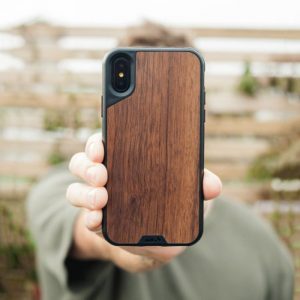
So when a brand like MOUS focuses on “extreme protection” while still caring about slimness, grip, materials, and compatibility with magnetic accessories, it’s not just selling fear. It’s selling friction reduction—less stress in the moments where you don’t have time to think. Their flagship-style cases are positioned as highly protective and MagSafe compatible, with a range of materials (like aramid fibre and real walnut) offered in certain lines.
And that’s the pivot most people miss.
A good case doesn’t just help you survive a drop. It helps you stop thinking about drops.
“Protective” usually means “ugly.” MOUS tries to break that rule.
Let’s be honest: a lot of protective cases look like they were designed by someone who hates phones.
Big corners. Thick sides. The vibe of industrial machinery. They scream “I am prepared for war,” when all you wanted was to scroll in peace.
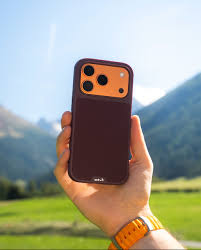
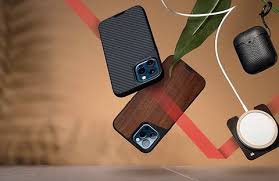
MOUS takes a different approach: protection, yes—but also materials you’d actually choose. Aramid fibre. Wood finishes. Clean lines. More “tailored jacket” than “full medieval armor.” Their Limitless-style lineup is described as offering extreme protection and MagSafe compatibility, with various material backplates.
And the point isn’t vanity. The point is psychology.
If your case looks good and feels good, you keep it on. You don’t “temporarily” remove it for photos and then forget to put it back on. You don’t swap it for something slimmer when you go out. You commit.
Protection only works when you actually use it.
The magnet story: not just charging, but momentum
Here’s where things get interesting: MOUS doesn’t treat MagSafe compatibility as a checkbox. It treats it as the gateway to an accessory ecosystem.
The magnetic connection isn’t only for charging. It’s for snapping on a wallet. Mounting your phone for navigation. Parking it on a stand while you cook. Turning your phone into a tool, not a slippery object you keep placing face-down like it’s a sleeping baby.
MOUS openly organizes its cases into categories including “MagSafe Compatible,” and it sells magnetic accessories like wallets designed to attach firmly to compatible cases or MagSafe-enabled phones.
That matters because modern phone use is modular now. You don’t want one accessory. You want a setup that adapts.
And the quiet truth is this: once you start living with a good magnetic ecosystem, going back feels like going back to wired headphones. You can do it. But you’ll complain.
Protection isn’t one thing. It’s a stack of decisions.
People talk about “protection” as if it’s a single attribute. Like there’s a dial from 1 to 10.
But protection is really a stack:
- Corners (because corners are where phones usually land first)
- Raised edges (because screens are delicate and gravity is rude)
- Camera surround (because camera bumps are basically a second screen now)
- Material rigidity (to resist twisting, flexing, and micro-stresses)
- Grip texture (because the best drop protection is “don’t drop it”)
- Internal lining (to reduce scuffs and grit abrasion)
- Magnet strength & alignment (so accessories stay attached, not “mostly attached”)
MOUS talks about AiroShock® protection in its cases and highlights corner-focused protection in at least one clear-case product description, alongside a rigid shell concept.
So instead of asking, “Is it protective?” ask: “What kind of protective is it?”
Because a case that survives a drop but feels like holding a brick isn’t a win. And a case that looks sleek but turns your phone into a bar of soap isn’t a win either.
The sweet spot is where you don’t have to keep negotiating with your own preferences.
The “clear case” paradox, and why it matters
Clear cases are popular for one reason: you want to see your phone.
But clear cases have a reputation:
- They scratch.
- They yellow.
- They look “cheap” fast.
- They protect like a polite suggestion.
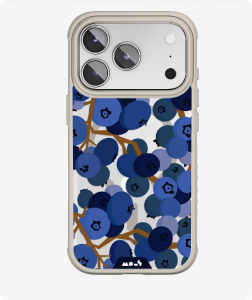
MOUS positions its Clarity line as a highly protective clear case, describing corner-focused AiroShock® and a rigid shell design, plus integrated magnetic compatibility (supporting Qi2 and MagSafe).
Why is that worth mentioning in a soft-sell article?
Because it shows the brand understands trade-offs. Clear cases are inherently a compromise. If a company invests in making that compromise less painful, it’s usually a sign the rest of the lineup isn’t just a styling exercise.
Also: if you’re the type who buys a new phone color and then hides it immediately, you know how silly that feels. Clear can be the right choice—if it doesn’t feel like you’ve chosen fragility.
The mount problem: “Where do I put this thing?”
Phones used to live in pockets and hands. That was it.
Now they live everywhere:
- in the car, running maps
- on a desk, running meetings
- on a tripod, filming content
- on a kitchen counter, playing recipes
- on a bike, pretending you’re in a Tour de France documentary
MOUS sells a range of phone mounts and describes them as enabling hands-free driving and use at home, with magnetic mounts and holders.
That’s not a small accessory category. It’s a lifestyle category.
Because once you use a solid mount setup, you stop doing that awkward “phone wedged between coffee cups” thing. You stop placing your phone on your lap during navigation like it’s a risky secret. You stop balancing it against a water bottle to film a clip.
A mount is a tiny upgrade that makes you feel absurdly organized.
IntraLock®: the “serious” mounting option
If MagSafe is the quick-snap convenience layer, MOUS also talks about something more mechanical: IntraLock®.
On its own site, MOUS describes IntraLock® as an “ultra-secure mechanical mounting technology” that lets you attach an IntraLock case to a variety of mounts (including bike mounts and content creation tools), while still offering Mous-grade protection and MagSafe compatibility.
Translation: “If you need this to stay attached while your life shakes, we have a system for that.”
That matters if you:
- bike on uneven roads
- ride a motorcycle
- film moving shots
- do delivery driving
- simply don’t trust magnets alone for high-vibration scenarios
It’s the difference between “good enough for my desk” and “good enough for reality.”
The wallet attachment: small convenience, weirdly addictive
Carrying a separate wallet is fine… until you don’t.
Magnetic wallets are one of those things people underestimate. They think it’s a gimmick, and then they experience it: the cards you actually need, attached to the device you never forget. Suddenly your pockets feel lighter. Your “where’s my card?” moments disappear.
MOUS sells magnetic wallets designed with MagSafe-compatible magnets for firm attachment to Mous cases or MagSafe-enabled phones.
Is it for everyone? No. If you carry a lot of cards, you’ll still prefer a traditional wallet. But for everyday minimal carry—ID, one or two payment cards—this is a quietly powerful lifestyle upgrade.
And it’s one of those upgrades that becomes “normal” fast.
The underrated category: screen protectors (the silent partner)
A case can be amazing. But if your screen is naked, you’re still rolling dice.
MOUS sells screen protectors across phones/tablets/watches in its broader product catalog.
Here’s the truth: most people don’t get screen protectors because installing them feels like performing surgery. Dust appears from nowhere. You trap a bubble. You swear you’ll redo it later. You don’t.
But if you’re building a “don’t think about it” setup, screen protection is part of the stack. It’s the quiet partner that keeps the front of your phone from collecting micro-scratches that turn into regret.
It’s not only phone cases. MOUS is trying to be your “tech carry” brand.
This is where MOUS gets strategic: it’s expanding beyond just phone cases. In its “all products” catalog, MOUS lists categories like MacBook cases, AirPods cases, and screen protectors, suggesting it’s building a broader device-protection ecosystem.
Why should you care?
Because consistency matters. If you like how a brand approaches protection—how it feels, how it looks, how it integrates—there’s value in having your gear work together instead of feeling like random purchases from five different companies.
One brand. One design language. One “this just works” vibe.
It’s like building a capsule wardrobe, but for your tech.
The “thinner but stronger” obsession (and why it’s a real flex)
The case market has a constant argument happening:
- Team Thin: “I want my phone to feel like a phone.”
- Team Protective: “I want my phone to survive my personality.”
MOUS wants to be the brand that ends the fight.
A recent TechRadar roundup described MOUS’s newer case generation as addressing bulk concerns by becoming significantly thinner while improving stiffness, plus featuring AiroShock material, MagSafe/Qi2 compatibility, and protective design elements like raised camera surrounds and enhanced rigidity in certain areas.
Now, you don’t need to memorize that. The point is this:
When a brand is actively engineering toward “less bulk, more structure,” it’s not just throwing materials together. It’s iterating. It’s treating a case like a product you can refine—not a commodity.
And that’s usually the difference you feel in the hand.
“Okay, but who is MOUS really for?”
Let’s make it practical. You’ll probably like MOUS if you’re any of these people:
1) The Drop-Prone Realist
You don’t want to drop your phone. You just… do. You’ve accepted it. You need protection that doesn’t shame you.
2) The Minimalist Who Secretly Needs Protection
You hate bulky cases. But you also hate cracked screens. You want a compromise that doesn’t feel like a compromise.
3) The MagSafe Power User
You use magnetic chargers, stands, wallets, mounts. You want everything to snap on cleanly, not “kind of” attach.
4) The Commuter / Driver
You need reliable navigation. You need hands-free. You need a mount that won’t betray you on a speed bump.
5) The Content-Creator-Adjacent Person
You don’t need a full rig, but you do film, shoot, mount, clip, move. You need attachment options beyond “lean it against a cup.”
6) The “I Bought an Expensive Phone, Why Am I Being Cheap Now?” Person
You finally admit it: spending premium money on a phone and then protecting it with bargain plastic is… weird.
How to choose without overthinking it
People freeze at the product page because there are options. Here’s a simple way to pick:
- If you want flagship-level protection + MagSafe + premium materials, look at the kinds of cases MOUS positions as its most protective/flagship line (like Limitless-style offerings).
- If you want a clear case but still want serious protection + magnets, the Clarity-style option is the obvious route.
- If you want mounting that feels extra secure for active use, explore IntraLock-compatible setups and mounts.
- If you want hands-free car/home use, browse the mount range and decide whether you want magnetic convenience or something more locked-in.
- If you want everyday minimal carry, a magnetic wallet is a clean add-on.
And here’s my favorite trick: don’t buy a case like it’s a single item. Buy it like it’s the hub of a small system.
Case + charger + mount (optional) + wallet (optional) + screen protection.
That’s the full “stop worrying about it” bundle.
The soft truth: MOUS sells confidence
Not the cheesy “you can do anything!” kind.
The practical kind.
The confidence of tossing your phone on the couch without flinching.
The confidence of taking it on a trip without packing anxiety.
The confidence of mounting it in the car and trusting it.
The confidence of not babying a device that’s meant to help you live.
And in a world where your phone is basically your second brain, that confidence is worth more than people admit.
So if you’re running ads for MOUS, the angle isn’t “buy a phone case.”
It’s: upgrade the relationship you have with your phone.
Stop treating protection like a boring insurance policy. Treat it like a design choice. A usability choice. A daily-life choice.
Because the best case isn’t the one with the loudest marketing.
It’s the one you forget about—because it quietly does its job, every day, while you get on with yours.